


Why track your mood?
Most of us remember our moods badly. A tough Monday colours the whole week, and the quiet good days blur together. A daily check-in gives you an honest record, and after a few weeks it starts to answer useful questions: do I feel worse after short nights? Better on days I walk? Flat when I forget to eat lunch?
There is a small benefit in the act itself, too. Research on “affect labelling” has found that putting a feeling into words can reduce its intensity. Naming the mood is a tiny pause that helps. Read more in the benefits of mood tracking.
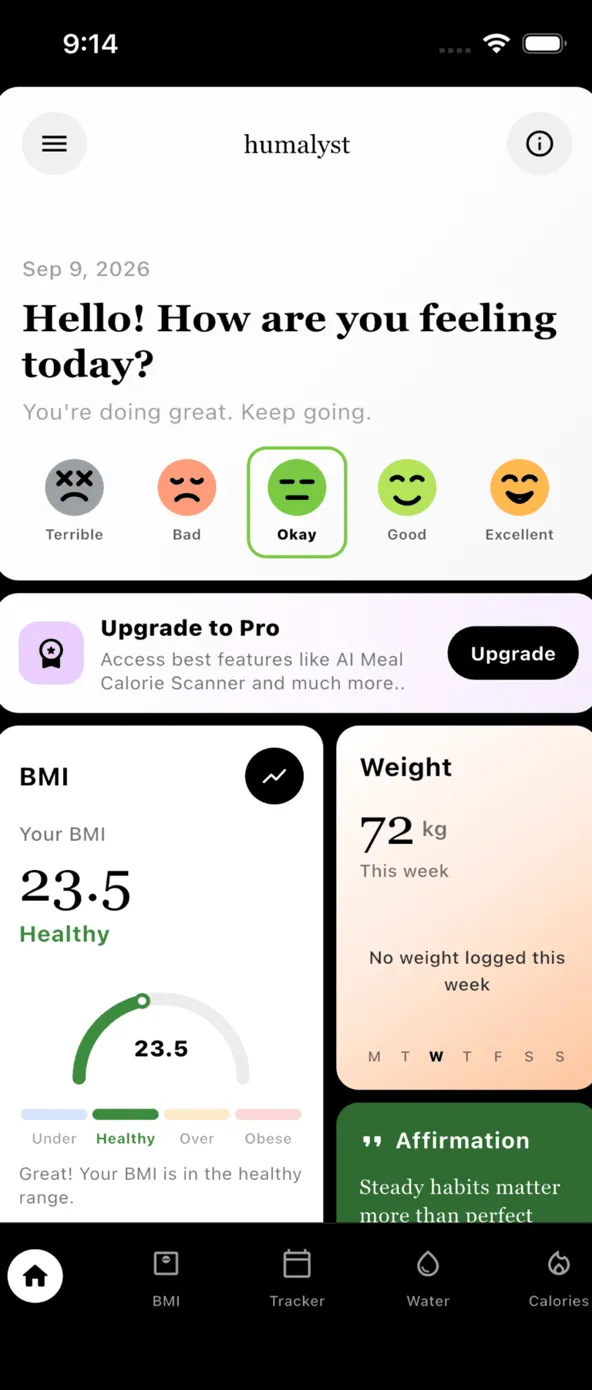
How the Humalyst mood tracker works
- Check in once a day. Pick one of five moods, from terrible to excellent. It takes about ten seconds.
- Add a note if you want. A line about what happened is enough to jog your memory later.
- Get a daily affirmation. A short, kind prompt to start or end the day.
- See your trends. Weekly, monthly and yearly views sit next to your water, calories and BMI, so you can see how they connect.
Tips for a mood journal that sticks
- Same time every day. Linking it to something you already do, like brushing your teeth at night, makes it automatic. See how to build healthy habits that stick.
- Keep it short. A one-word mood beats a page you never write.
- Look back weekly, not daily. Patterns only show up over time.
- Be honest. Nobody else sees it. “Okay” is a perfectly good answer.
When to talk to someone
A mood tracker is for self-awareness, not diagnosis. If you notice low mood most days for more than two weeks, losing interest in things you usually enjoy, or it is affecting work, sleep or relationships, talk to your doctor or a mental health professional. The NHSEvery Mind Matterssite is a good free starting point. If you are in crisis, contact your local emergency number.
Frequently asked questions
What is a mood tracker?
A mood tracker is a simple daily log of how you feel. Over a few weeks the entries show patterns, such as how sleep, food, water or busy days affect your mood, that are easy to miss day to day.
How often should I track my mood?
Once a day is enough for most people. Pick a consistent moment, like the evening, and keep it quick. Consistency matters more than detail.
Is the Humalyst mood tracker free?
Yes. Daily mood check-ins, notes and daily affirmations are free in Humalyst on iPhone and Android.
Can a mood tracker replace therapy or treatment?
No. A mood tracker is a self-awareness tool, not a diagnosis or treatment. If low mood lasts more than two weeks or affects daily life, talk to a doctor or a mental health professional. If you are in crisis, contact your local emergency number.
Is my mood data private?
Your mood logs stay on your phone. Signing in is only needed if you choose Humalyst Pro.
Sources
This page is general information, not medical advice. Results are estimates. If you have a health condition, are pregnant, or are making a big change to how you eat or drink, talk to a doctor or registered dietitian first.